




HERE IS A DEEPER NOTE ON THE EPISODE
When a Nation Loses Its Memory!
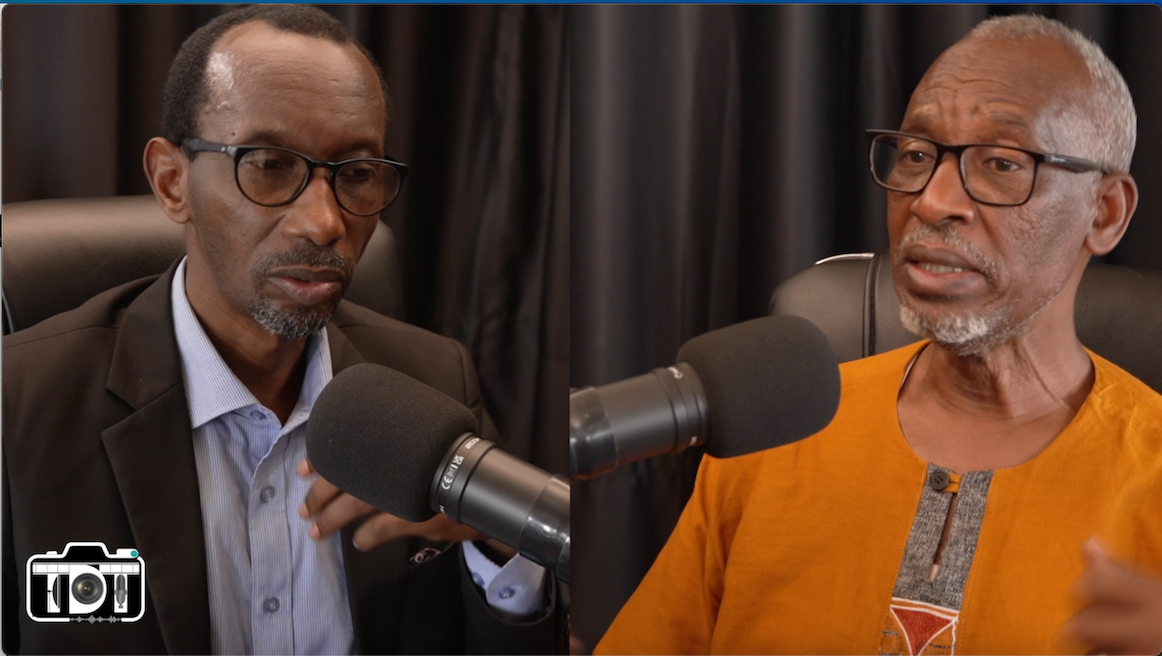
What if a nation could lose not only its people, its institutions or its territory — but also its memory? And what if, years later, rebuilding that memory became part of rebuilding the nation itself? That is where my conversation with Gerome Kajuga eventually took me.
We began with King Ruganzu II Ndoli, who ruled Rwanda in the early 1500s, alongside his remarkable queen mother, Nyirarumaga. But this was never really a conversation about a king who lived five centuries ago. It became a conversation about something much closer to us: how human beings decide what deserves to be remembered, how they transmit it, and what happens when that transmission is interrupted.
History remembers Nyirarumaga as a renowned poet and as the person credited with introducing Impakanizi, a poetic form used to recount the reigns of kings. She also created a council of poets that helped preserve and transmit this knowledge for generations. Think about that for a moment.
Before recording studios. Before cameras. Before archives and databases. Before Google. Before “the cloud.” There were people. People who remembered. People who recited. People who listened. People who passed knowledge on.
And then there was Ruganzu, who, according to the traditions surrounding him, found another way to leave his mark — including through igisoro, the traditional Rwandan game [a little like a chess board], and through physical traces associated with his reign.
Kajuga’s larger point is fascinating: technology changes; the human need to document does not. Knowledge moved from spoken word to stone carving, from stone to parchment and paper, and from paper to what we casually call “the cloud.” But the arrival of a new technology does not make the old one worthless!
That may sound obvious. Yet we often tend to look down on what our ancient folks knew or did, and we behave as if progress required us to erase what came before. Perhaps Ruganzu’s genius was not that he used an “old” technology. It was that he understood the importance of leaving something behind. And perhaps that is the real question for us today: What are we leaving behind?
Ruganzu’s story is also a story of rupture and restoration. He is credited with returning from exile, organizing an army and reclaiming a kingdom that had been fragmented and controlled by different local rulers after his father’s death. Kajuga describes that period as one in which Rwanda effectively died — and later draws a powerful parallel with the rescue of the country centuries later by the RPF Inkotanyi after the genocide against Tutsis in 1994. Whatever one’s interpretation of those historical comparisons, the question underneath them is worth asking: What does it take to put a broken country back together?
Armies can win battles, leaders can revamp institutions, governments can write policies … But countries are also held together by something less visible: shared stories, rituals, symbols, memory and a sense that the people inhabiting the same territory somehow belong to a common story. This brings us to Umuganura. Ruganzu II Ndoli is credited with restoring this annual practice of thanksgiving, retrospection and planning — a collective moment in which Rwandans could celebrate what had been achieved, take stock and look ahead. It was not simply a harvest festival. It was, in a sense, a national reflection. And perhaps that is why its history matters so much even today.
The Belgian colonialist abolished Umuganura in 1925, in a move to weaken one of the nation’s unifying elements. Over time, what remained in popular memory was largely the celebration of harvest and sharing food. The deeper practice of collective reflection and planning had been stripped away. And then something even more profound happened. During the decades leading up to the 1994 Genocide against the Tutsi, elements of Rwanda’s cultural heritage were increasingly treated as if they belonged to the monarchy — and therefore to a political order that the republic had supposedly replaced. ‘Stop talking about those practices from royal times … we’re a republic now!’, Mr Kajuga is heard, emotionally mimicking some during that period.
Kajuga recalls the mindset bluntly: the idea was to replace the king, the chiefs and everything associated with them. But there was a fundamental mistake in that thinking: ‘Culture does not belong to a king or a regime’. That sentence stayed with me. Because I remember something of that discomfort myself, growing up in Rwanda. There were things you were not supposed to talk about because they belonged to “the old Rwanda.” Traditions could become politically suspect simply because they had existed under a monarchy. And what happens when a society starts treating its own cultural memory as something embarrassing, dangerous or obsolete? The transmission stops. The thread breaks. And when the thread breaks, something inside a nation can become strangely hollow.
One could go so far as to connect that rupture to the catastrophe that followed. This echoes what Mr Jean Mukimbiri, a scholar and culture expert, once said “Genocide is preceded by ‘culticide’”. What about the ten stages of genocide with Gregory Stanton? Classification [with ‘us’ vs. ‘them’], sympolization [weaponizing some practices & values], descrimination, dehumanization, denial … Take a closer look for yourself! But perhaps the broader question is less controversial: What does a society lose when it stops teaching its children where they come from?
This is why Nyirarumaga matters to this conversation. Her contribution was not merely poetry. She helped create a system through which memory could travel across generations. Centuries later, the philosopher, theologian and linguist Mgr Alexis Kagame worked with elders who could recite enormous amounts of this history from memory and helped put much of it into writing. Think about the chain: A queen mother creates a poetic tradition, poets preserve it; elders memorize it, a recent king understands the stakes and gives permission to a scholar to record it. And eventually, people like Kajuga come along and ask: What do we do with it now? That is where history stops being history and becomes responsibility.
Kajuga has chosen his answer. He created Ibisumizi assosiation, named after Ruganzu’s famous army — those who, as the name suggests, were associated with ‘fearlessness in battle’. Today, through Mountain Sports Club Ibisumizi and the development of what he calls culture-based tourism around the Huye mountain chain, he is trying to put Ruganzu’s legacy quite literally on the map.
At the foot of the mountains, he has developed Bungwe Queen’s Park — a starting point for exploring the landscape and a series of historical sites in that chain, including the site associated with Nyagakecuru, the powerful woman who is remembered for seceding in Huye before Ruganzu defeated her. This is an unusual model of tourism … You don’t simply climb a mountain, you climb through a story, where the landscape becomes an archive, and the trail a history lesson. A physical place becomes a way of asking: Who were we? What happened here? And what does it mean to us now?
Kajuga says there are around forty sites associated with Ruganzu across Rwanda that deserve further documentation and safeguarding. His ambitions include more research, books, poems, improved trails and the preservation of these sites. But he also worries about something very modern: Will young people care? That may be the hardest question of all. Because you cannot preserve a culture simply by building monuments to it. You need people who want to inherit it. We’re not really seeing that yet though! Partners and actors are trickling in to raise awareness, and restore what’s precious in our culture and history.
Umuganura has been restored in … its true colors. Remember, there was that aspect of sharing a traditional drink too. With Mr Kajuga, we talked about ikigage, urwagwa, inkangaza, inturire and other traditional beverages — and Kajuga’s argument was essentially this: Why should preserving culture mean preserving it exactly as it was? Why not improve it? Why not bring traditional products into modern safety standards, packaging, production and markets? Why should Rwanda end up importing Bordeaux wine and Spanish cakes while abandoning its own traditions instead of asking whether those traditions could themselves become products the world might want?
That question is bigger than beer. It is about the difference between preservation and fossilization. A culture that cannot change will eventually disappear. But a culture that changes so completely that it no longer recognizes itself has also lost something. The challenge is to carry the thread forward.
That, perhaps, is what I heard underneath our entire conversation. That was the thread. Nyirarumaga picked up a thread and passed it to poets; poets passed it to elders; elders passed it to scholars. Now people like Kajuga are trying to pick it up again. The methodology may change. The technology will certainly change. The people carrying the work will change. But, as Kajuga puts it with remarkable conviction, Ruganzu’s legacy does not have to disappear.
I met him several years ago, when he was breaking ground at what has since become Bungwe Queen’s Park at the foot of the Huye mountains.
He has done much of this work with extraordinary determination and very little fanfare. And I find myself wondering: What could Rwanda look like if there were many more people willing to fight — peacefully, creatively and persistently — for the things that deserve to survive?
Not because everything from the past was perfect.
Not because every old practice should be restored exactly as it was.
But because a nation that forgets everything before yesterday becomes a very poor storyteller about itself.
And perhaps that is the deeper lesson of Ruganzu.
He did not merely leave a story.
He understood that someone has to leave something for the next generation to find.
The question is: What will we leave?
Thank you.


